
How a Camera Works
What Is Photography?
Photography is the art, science, and practice of capturing images using light. The word “photography” comes from two Greek words:
- Photo – meaning light
- Graphy – meaning drawing
So, photography literally means “drawing with light.”
When light enters a camera and falls on a sensor or film, an image is created. This process may sound simple, but it combines technical skills, creativity, and storytelling.
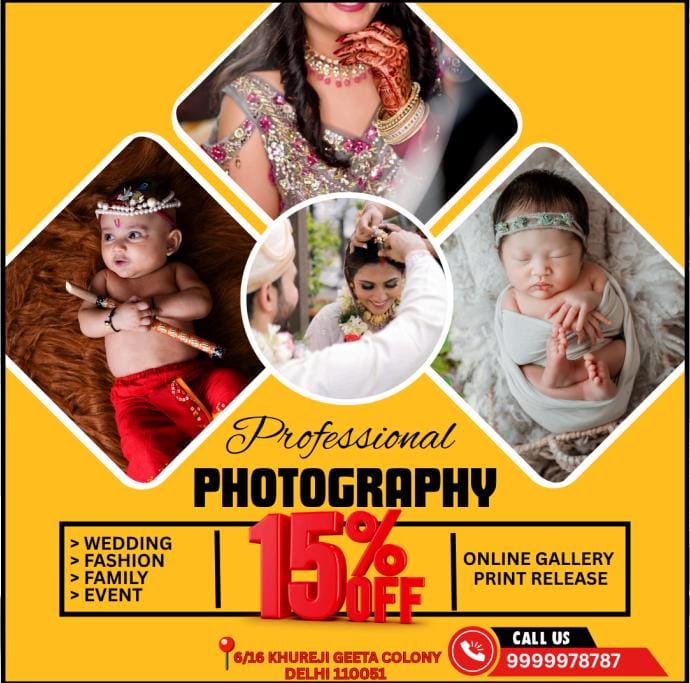
A Brief History of Photography
Photography has evolved tremendously over the years. Here’s a quick overview:
1. Early Experiments (Before 1800s)
The concept of capturing images began with the camera obscura, a dark box where light created a projection of the outside world on the opposite wall. However, people couldn’t record or save these images.
2. First Permanent Photograph (1826)
Joseph Nicéphore Niépce captured the world’s first permanent photograph using a metal plate coated with chemicals. It took eight hours to expose!
3. Invention of Film Cameras (1880s–1900s)
George Eastman introduced film rolls and the Kodak camera, making photography accessible to normal people for the first time.
4. Rise of Color Photography (1930s–1960s)
Color films like Kodachrome allowed photographers to capture colorful, vibrant images.
5. Digital Photography (1990s–Present)
Digital cameras replaced film, and today smartphones with powerful cameras have made photography available to everyone.
From long exposure plates to DSLRs and mirrorless cameras, photography is constantly evolving with technology.
Why Photography Is Important
Photography has become a major part of our daily lives. Here’s why it matters:
1. Captures Memories
Photos help us preserve the best moments of life—birthdays, weddings, travel, achievements, and emotional milestones.
2. Tells Stories
A single photo can explain situations better than long paragraphs. This is why media, journalism, and social campaigns use strong images.
3. Boosts Creativity
Photography encourages people to observe, think differently, and express their creativity.
4. Helps Businesses Grow
Brands rely heavily on photography for marketing, ads, product shoots, and social media.
5. Preserves History
Photos are powerful records of culture, events, and society.
6. Builds Careers
Photography offers various career paths, from wedding photographer to wildlife journalist, fashion photographer, and more.
Different Types of Photography
Photography is a diverse field with many specialized categories. Below are some of the most popular types:
1. Portrait Photography
Captures the personality, emotions, and expressions of individuals or groups. Used in modeling, resumes, family portraits, and more.
2. Landscape Photography
Focuses on nature—mountains, rivers, sunsets, forests, beaches. Ideal for travel and adventure lovers.
3. Wildlife Photography
Involves capturing animals in their natural environment. Requires patience, skill, and high-quality equipment.
4. Wedding Photography
One of the most in-demand photography professions; includes candid, traditional, and cinematic styles.
5. Street Photography
Captures everyday life, people, and urban environments. It’s spontaneous and artistic.
6. Fashion Photography
Used in magazines, brand campaigns, and modeling industries. Often shot in studios or outdoor locations.
7. Macro Photography
Focuses on extreme close-up shots, like insects, flowers, textures, or tiny objects.
8. Sports Photography
Captures high-speed action during sports events. Requires fast shutter speeds and quick reflexes.
9. Product Photography
Used by businesses to showcase products for e-commerce websites and advertisements.
10. Travel Photography
Mixes landscape, culture, architecture, and people—perfect for bloggers and influencers.
11. Editorial & Documentary Photography
Tells real-life stories for newspapers, magazines, and NGOs.
12. Food Photography
Popular in restaurants, menus, food blogs, and social media.
By choosing a niche, photographers can sharpen their skills and build a strong professional portfolio.
How a Camera Works (Simple Explanation)
A camera works by controlling light. Here are the three key elements:
1. Aperture
A small opening in the lens that controls how much light enters the camera.
- Wider aperture = more light + blurry background
- Narrow aperture = less light + sharp background
2. Shutter Speed
Controls how long the camera sensor is exposed to light.
- Fast shutter = freezes motion
- Slow shutter = motion blur and long exposures
3. ISO
Controls the camera sensor’s sensitivity to light.
- High ISO = bright images but noisy
- Low ISO = clean but requires more light
Together, these three create the Exposure Triangle, which is the foundation of capturing great photos.
Essential Photography Equipment
If you want to get started in photography, here’s what you may need:
- Camera (DSLR, Mirrorless, or Smartphone)
- Lens (Depends on your niche: portrait, zoom, macro, wide-angle)
- Tripod
- Lighting equipment (Softbox, ring light, etc.)
- Memory cards & batteries
- Editing software (Lightroom, Photoshop, Snapseed)
Beginners can start with a smartphone and later upgrade as skills improve.
Tips for Beginners in Photography
Here are simple tips to improve your photography skills fast:
✓ Understand lighting
Natural light is the best for beginners. Shoot during golden hours (early morning or sunset).
✓ Keep your lens clean
A dirty lens can ruin even the best photos.
✓ Learn basic composition rules
Rule of thirds, symmetry, framing, and leading lines help create visually appealing images.
✓ Practice daily
Photography improves with consistent practice.
✓ Shoot in different angles
Try top-angle, low-angle, side-angle, or close-up shots.
✓ Edit your photos
Simple editing can dramatically improve image quality.
Conclusion
Photography is much more than clicking a button—it’s a creative art, a visual language, and a way to express stories. From capturing memories to building a professional career, photography has the power to connect people across cultures and generations.
Whether you want to become a professional photographer, improve your social media photos, or simply enjoy capturing moments, understanding the basics of photography is the first step. With practice, patience, and creativity, anyone can master the art of photography.